
Food and Farm Systems by Anshuman Das
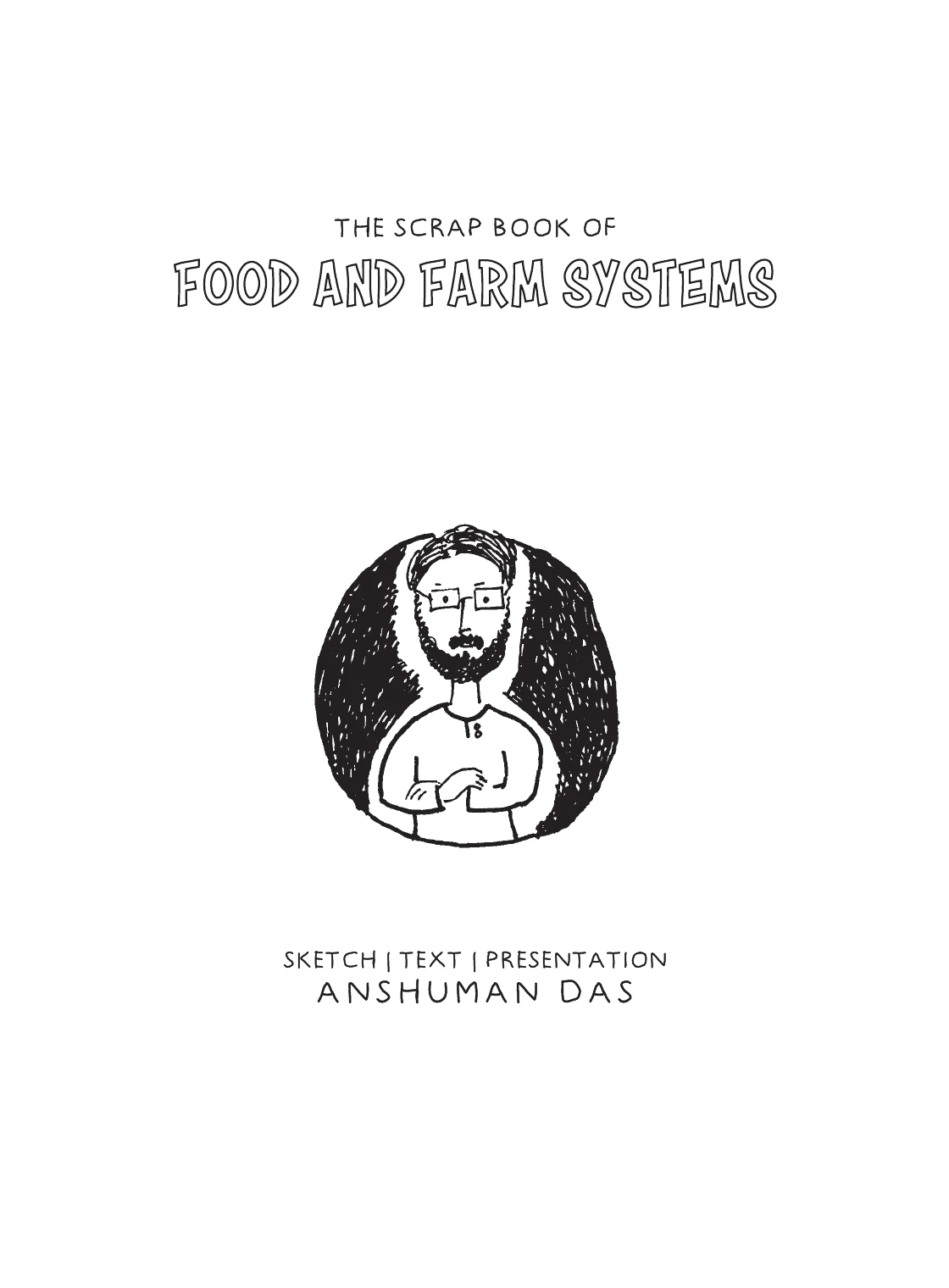
An illustrated scrapbook exploring agroecology, food, farming and the systems that connect them.
Food and Farm Systems by Anshuman Das approaches agriculture from a simple but important idea: food cannot be understood only by looking at crops or production.
Food is connected with soil, water, seeds, biodiversity, nutrition, markets, culture, communities, livelihoods, climate and the choices societies make about how food is produced and consumed.
Published by Gateway Publishing House, the book brings these interconnected questions together through sketches, diagrams, short explanations and visual narratives.
Rather than presenting itself as a conventional textbook or technical manual, the book offers a broad visual journey through the complexities of food and farming systems.
A Visual Way of Understanding Food and Farming
Food and farm systems are complex. A change in one part of the system can influence many others: seed choices may affect biodiversity; farming practices influence soil and water; market structures affect what farmers grow; food production connects with nutrition, livelihoods and environmental change.
Food and Farm Systems uses hand-drawn illustrations, diagrams, short observations and interconnected ideas to make these relationships easier to explore.
The book grew from Anshuman Das’s experience of teaching agroecology and interacting with farmers and change-makers. Its visual scrapbook format allows the reader to move between questions, systems, practices and possibilities rather than follow a purely academic or linear explanation.
What the Book Explores
Food Beyond the Plate
The book begins by widening the meaning of food. Food is connected with agriculture, ecology, markets, nutrition, culture, communities, seeds, land, livestock, health, traditions and the environment. This broader view establishes one of the central ideas of the book: understanding food requires understanding the system around it.
The History of Food and Agriculture
The book traces changes in food and farming across time—from hunting and gathering and the beginnings of agriculture to industrialisation, modern agricultural technologies, global food markets and the Green Revolution. Rather than presenting history as an isolated timeline, it encourages readers to consider how control over land, resources, technologies and markets has influenced the way food systems evolved.
Biodiversity and Monoculture
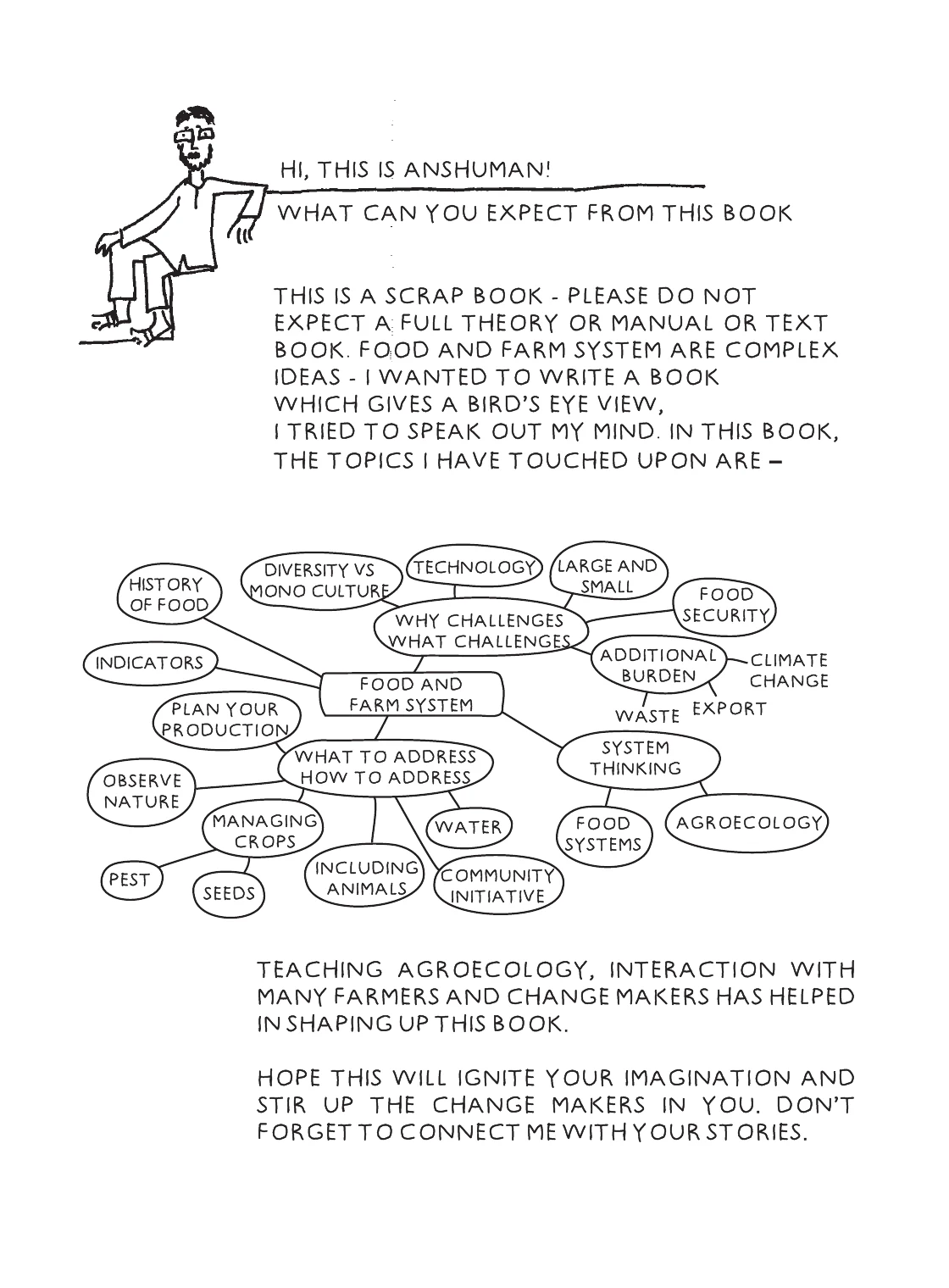
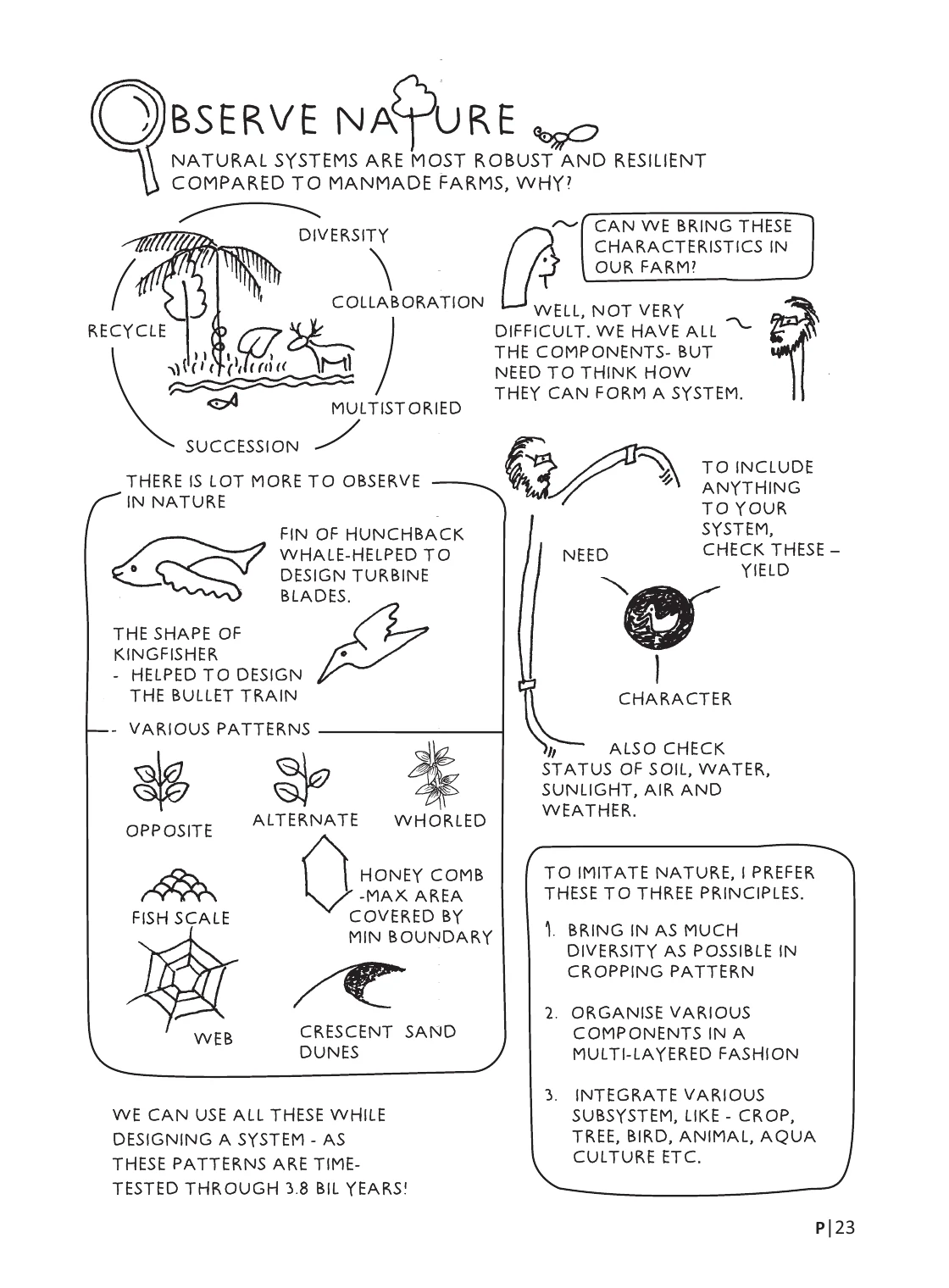
What happens when diverse ecological systems are simplified into monocultures? Through sketches and comparisons, the book explores diversity, succession, recycling, collaboration and multi-layered natural systems alongside the characteristics of industrial monoculture. It invites readers to think about resilience not simply in terms of the productivity of a single crop, but through the relationships between different parts of an ecosystem.
Technology, Seeds and Farming Choices
The book examines agricultural technologies and raises questions about how technologies interact with natural systems. Topics include fertilisers, pesticides, high-yielding varieties, hybrid seeds, genetically modified crops and the preservation of locally adapted seeds. The emphasis throughout is on looking beyond a single technological solution and understanding the larger system in which that technology operates.
Small Farms and the Wider Food System
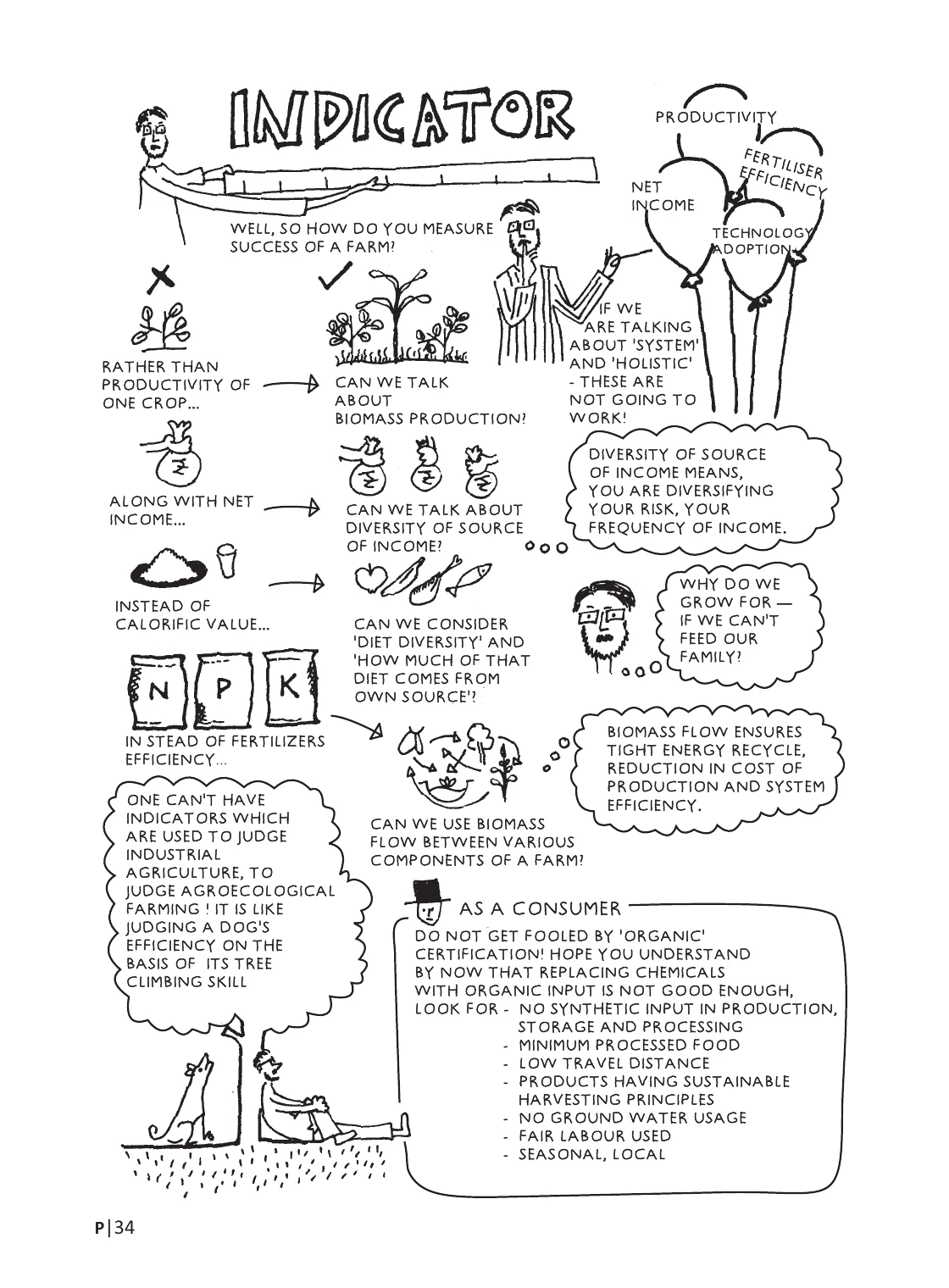
Another recurring question is scale. The book looks at small and large farms, access to land, farm diversity, food production and the relationship between farmers and markets. It encourages readers to consider agricultural success not only through the quantity of a single crop, but also through diversity, resilience, nutrition, income and the use of locally available resources.
Food Security Is More Than Producing More Food
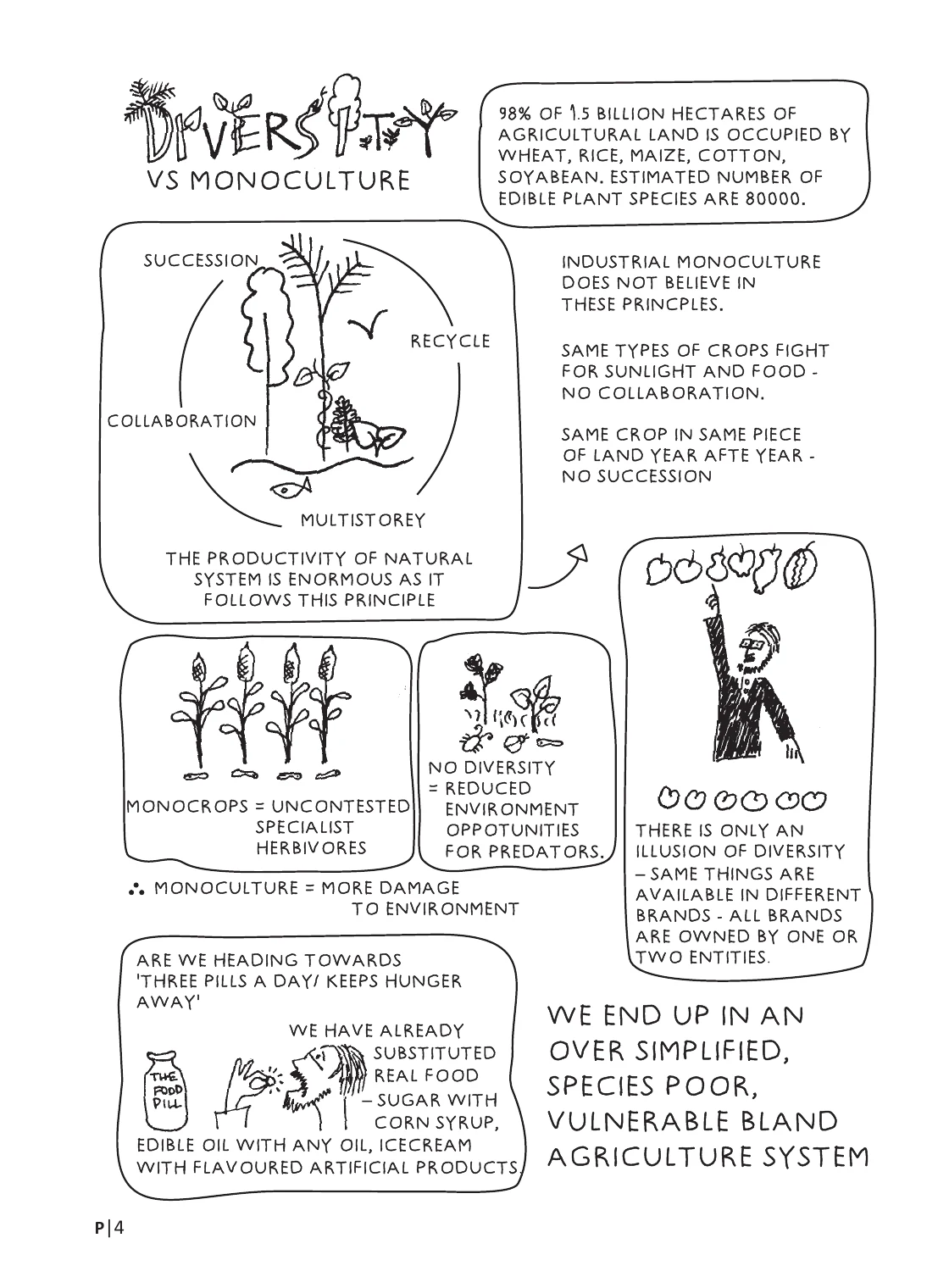
Food security is explored not only as a question of whether enough food exists, but also through questions of nutrition, diversity, access, local food systems and consumption. The book asks readers to look beyond calorie production and consider the quality and diversity of food available to people. This connects the discussion of agriculture directly with nutrition, markets, policy and everyday food choices.
Climate Change, Food Loss and the Additional Burden
Modern food systems are also examined in relation to environmental pressures. The book discusses food loss and waste, long-distance food movement, water use, agricultural production and climate change. These sections bring farming into a wider environmental context and ask how food systems can become more local, resource-conscious and resilient.
From Problems to Systems Thinking
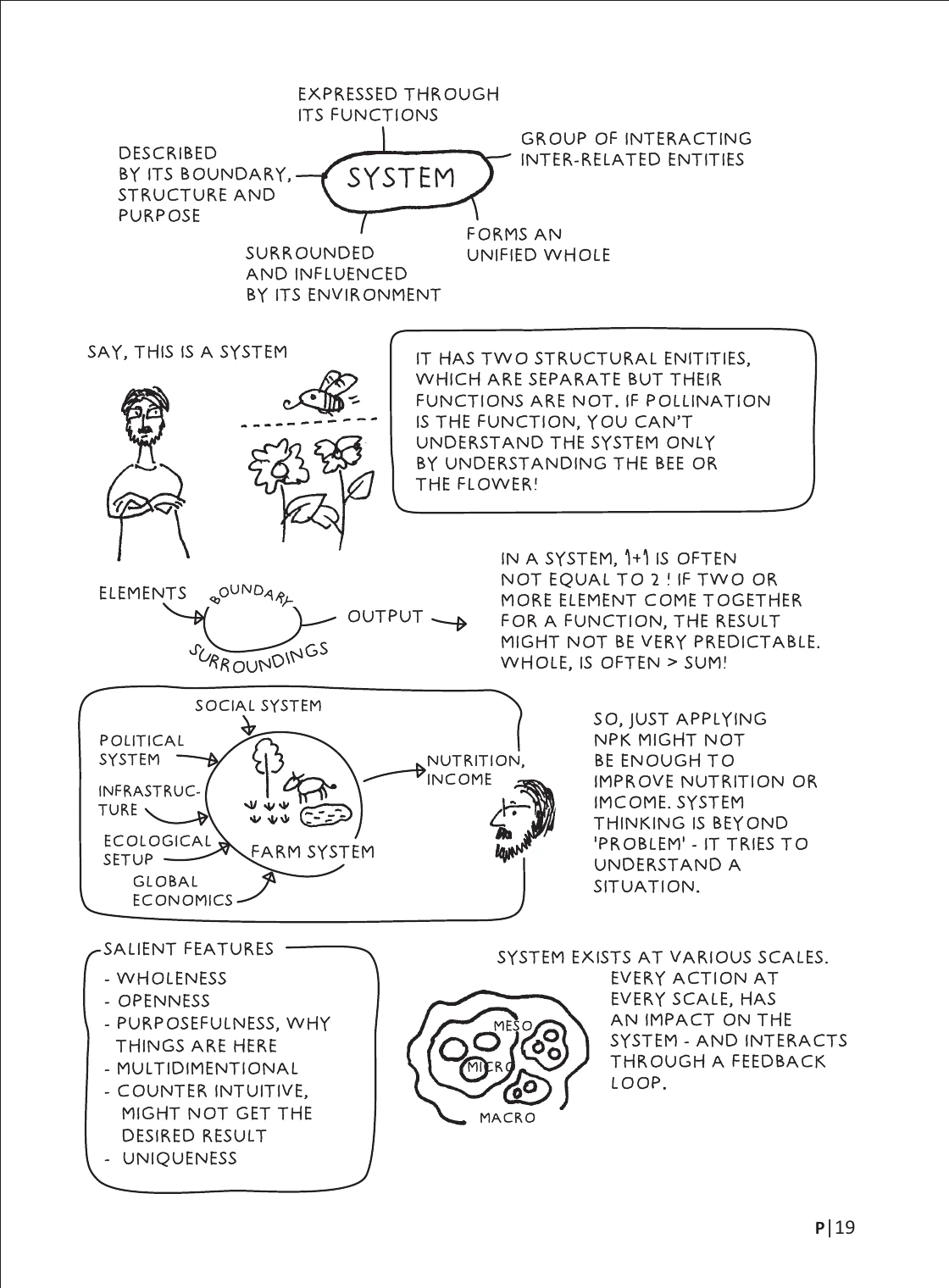
A central turning point in the book is the idea of systems thinking. Instead of isolating one problem and searching for one solution, systems thinking looks at relationships. A farm, for example, does not exist independently of its soil, water, crops, animals, biodiversity, household, local economy, infrastructure and wider ecological setting. The book encourages the reader to see these elements as interconnected parts of a larger whole.
Rethinking the Farm as a Living System
The book explores how farms can be designed and managed through relationships between crops, trees, animals, water, soil, biomass, seeds, household resources, markets and communities. The emphasis is not simply on adopting individual techniques. Instead, readers are encouraged to understand what resources already exist, what needs must be met and how different components can work together.
Planning Food and Farm Systems
The book introduces practical ways of thinking about farm and community planning. These include observing local resources, identifying periods of stress, understanding food and nutrition needs, mapping available resources and imagining how a farm system could change over time. The purpose is to move from isolated agricultural interventions towards integrated planning.
Learning from Nature
Natural ecosystems provide an important reference point throughout the book. Diversity, recycling, succession, multiple layers and relationships between species offer clues for designing resilient farming systems. The book connects these observations with ideas from permaculture and ecological farming, while repeatedly returning to the importance of understanding local needs and conditions before choosing a particular technology or practice.
Crops, Trees, Animals, Water and Seeds
Several sections explore specific components of an integrated farm system.
- Mixed cropping and crop rotation
- Crop diversity
- Trees and multi-layer farming
- Livestock integration
- Ponds and fish
- Soil cover and mulching
- Composting and biomass recycling
- Soil and water conservation
- Ecological pest management
- Seed preservation and exchange
Together, these examples show how individual practices can become more meaningful when they are connected within a larger farm system.
Community and Local Food Systems
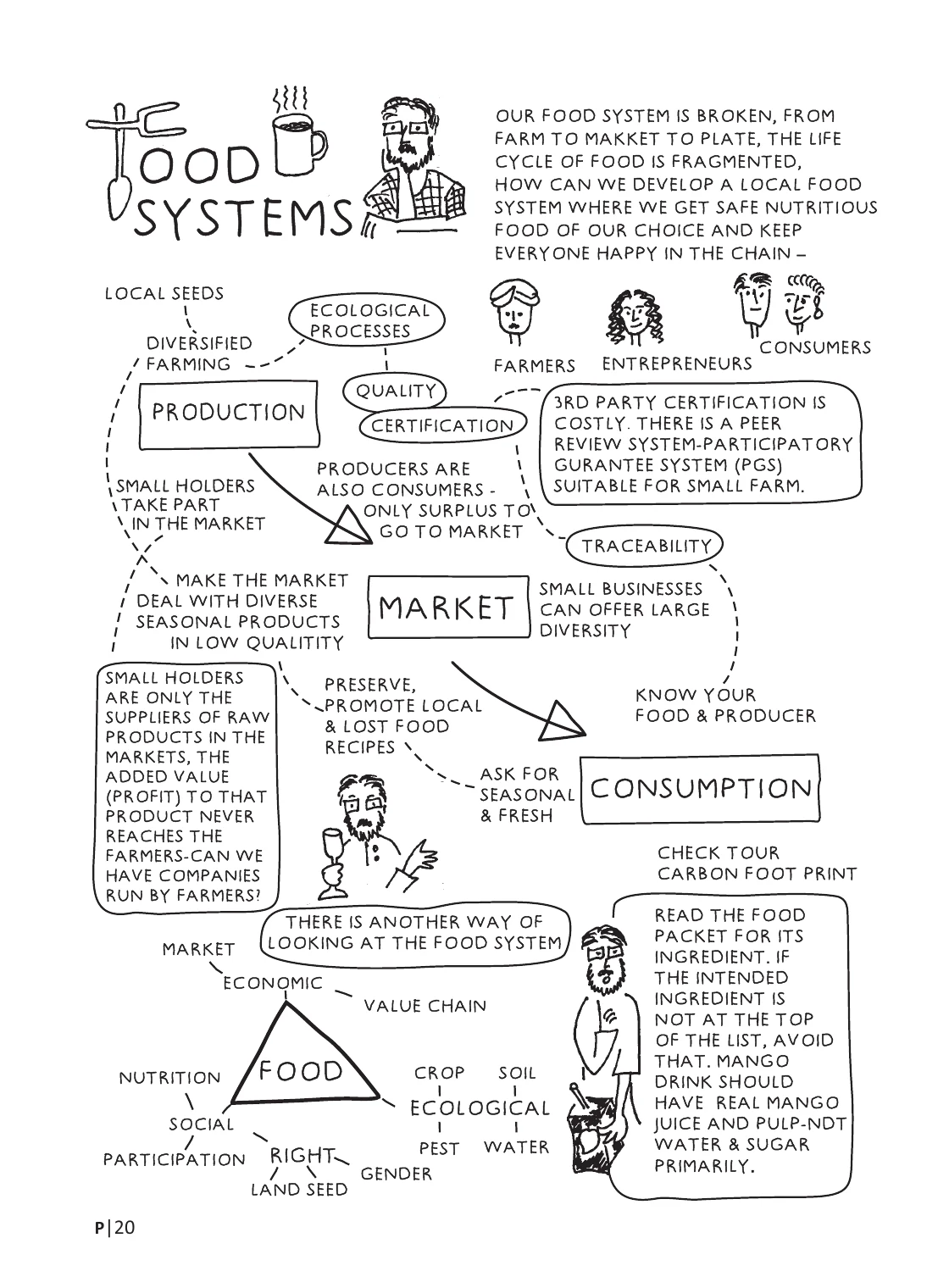
The book eventually moves beyond the individual farm. It considers how communities can manage food, natural resources, common storage, value addition and local markets. It also raises questions about relationships between farmers, consumers, small businesses and community institutions.
How can a food system support nutrition, livelihoods, ecological health and greater local participation at the same time?
Agroecology: Bringing the Ideas Together
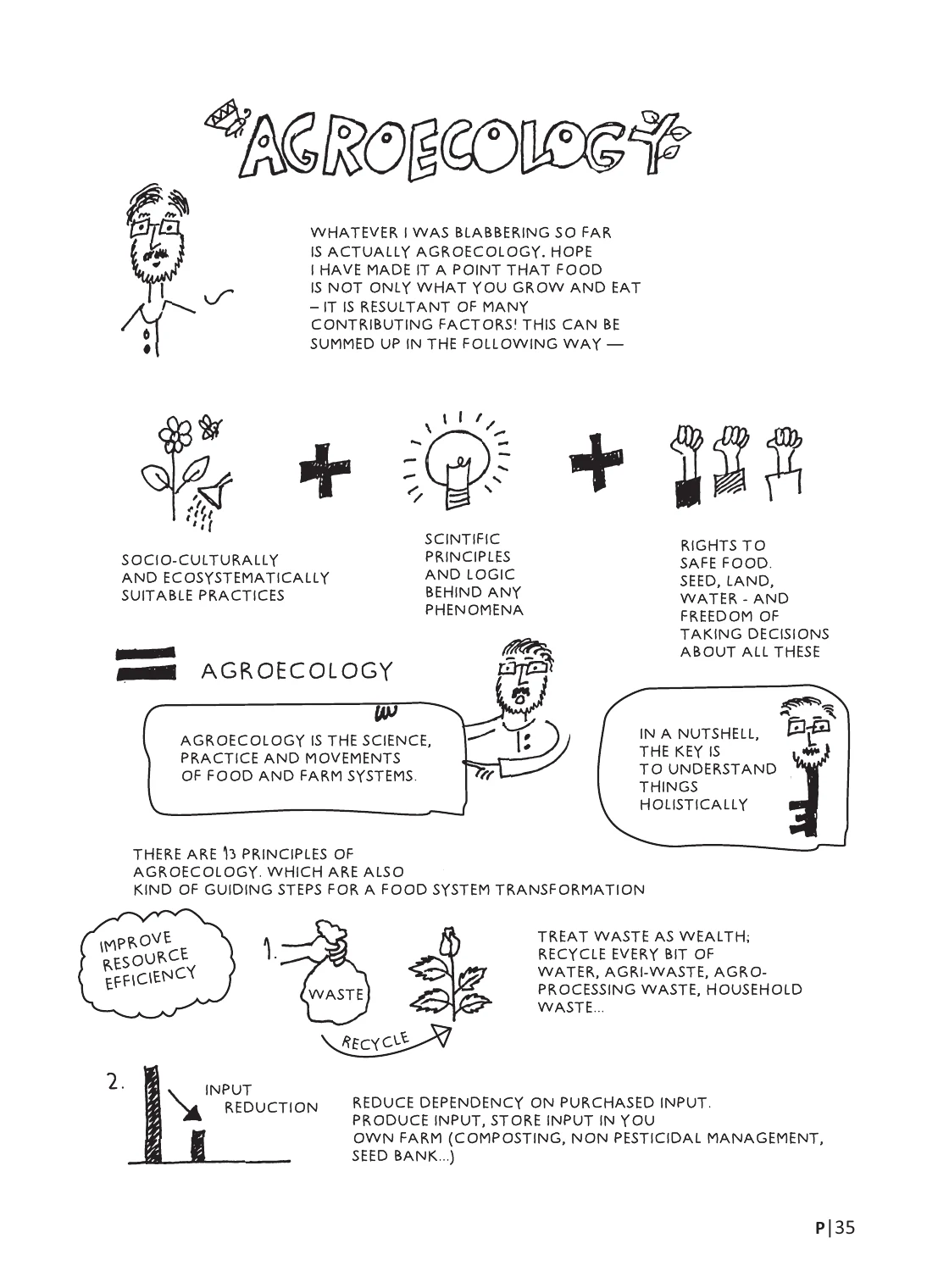
The book ultimately brings many of these discussions together through agroecology. Agroecology is presented not simply as a collection of farming techniques but as an approach that connects ecological processes, knowledge, food traditions, rights, livelihoods, diversity and community participation.
- Recycling
- Reducing external inputs
- Improving soil health
- Animal health and welfare
- Biodiversity
- Synergy between different components
- Economic diversification
- Co-creation of knowledge
- Social values and food traditions
- Fairness
- Producer-consumer connectivity
- Natural-resource governance
- Participation
Together, these principles provide a framework for thinking about food-system transformation as something ecological, economic and social at the same time.
Inside Food and Farm Systems
The visual language of the book is central to the reading experience. Hand-drawn diagrams turn complex relationships into visual conversations—sometimes through maps and systems diagrams, sometimes through farming examples, and sometimes through humour and simple characters.
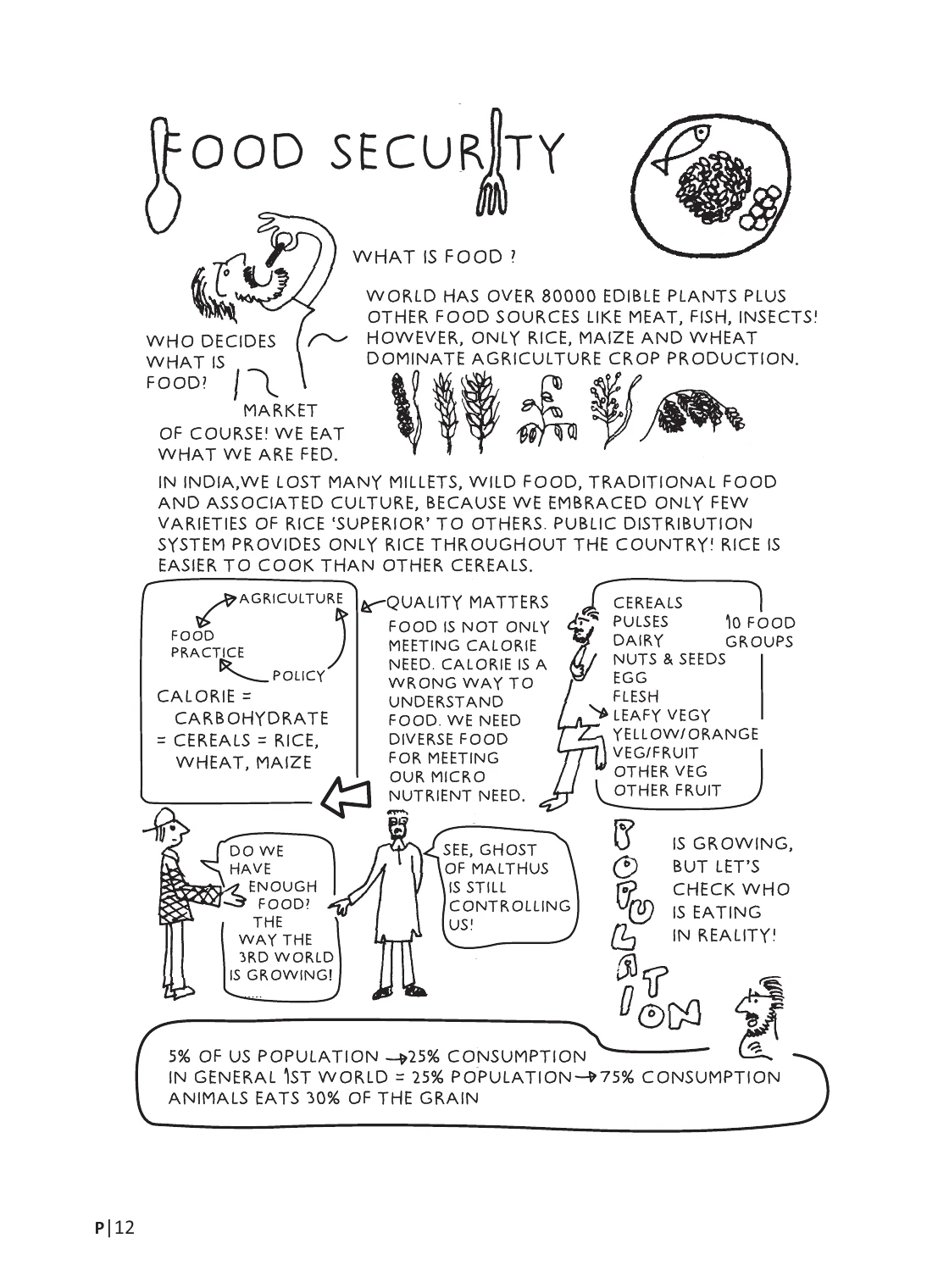
What Can You Expect From This Book
Diversity vs Monoculture
Food Security
Systems Thinking
Local Food Systems
Observe Nature
Indicators
Agroecology
Why the Scrapbook Format Matters
Some ideas are difficult to understand when they are separated into definitions, chapters and specialised disciplines. Food systems are one of them. Agriculture cannot easily be separated from ecology. Nutrition cannot be separated from food access. Farming cannot be separated from markets, water, land, biodiversity or community.
The scrapbook format allows these connections to remain visible. Sketches sit beside questions. Diagrams connect ideas. Practical examples appear alongside larger reflections. The result is a book designed not only to provide information, but to encourage readers to look at familiar questions from a wider systems perspective.
Who May Find This Book Useful?
Food and Farm Systems may be particularly relevant to readers interested in:
- Agroecology
- Sustainable agriculture
- Food systems
- Ecological farming
- Food and nutrition
- Smallholder agriculture
- Biodiversity
- Seed conservation
- Community-based development
- Systems thinking
It may also be useful as a visual conversation starter for practitioners, learners and people working with farming and food-system issues.
About Anshuman Das
Anshuman Das is Lead Expert – Agroecology and Food Systems at Welthungerhilfe, with extensive experience in agroecology, sustainable food systems and natural-resource management. His work has involved engagement with farmers, communities and food-system initiatives, combining field-based learning with systems thinking and agroecological approaches.
His experience of teaching agroecology and interacting with farmers and change-makers directly informed the development of Food and Farm Systems, which uses sketches, diagrams and short reflections to explore the relationships between agriculture, ecology, nutrition, markets and communities.
Book Details
- Title: Food and Farm Systems
- Bibliographic title: Scrapbook of Food and Farm Systems
- Author: Anshuman Das
- Format: Paperback
- First published: 6 October 2024
- ISBN: 978-93-92251-61-0
- Publisher: Gateway Publishing House
- Edited by: Malini Mukherjee and Ujaan Das
- Layout by: Abhijit Das
- Printed and bound in India by: Gateway Graphics
- Language: English
Published by Gateway Publishing House
Gateway Publishing House works with books and publications that contribute to knowledge, documentation and meaningful public conversations.
Food and Farm Systems brings together visual storytelling and systems-based thinking around agriculture, ecology and food. Its publication reflects an area of Gateway’s wider knowledge ecosystem concerned with preserving, structuring and making complex ideas accessible through thoughtful publishing.
Availability or Publication Enquiries
For information about the book or Gateway Publishing House publications, contact Gateway Graphics.